December 2026 News
Posted on 28 November 2026 by Stephanie J Moore
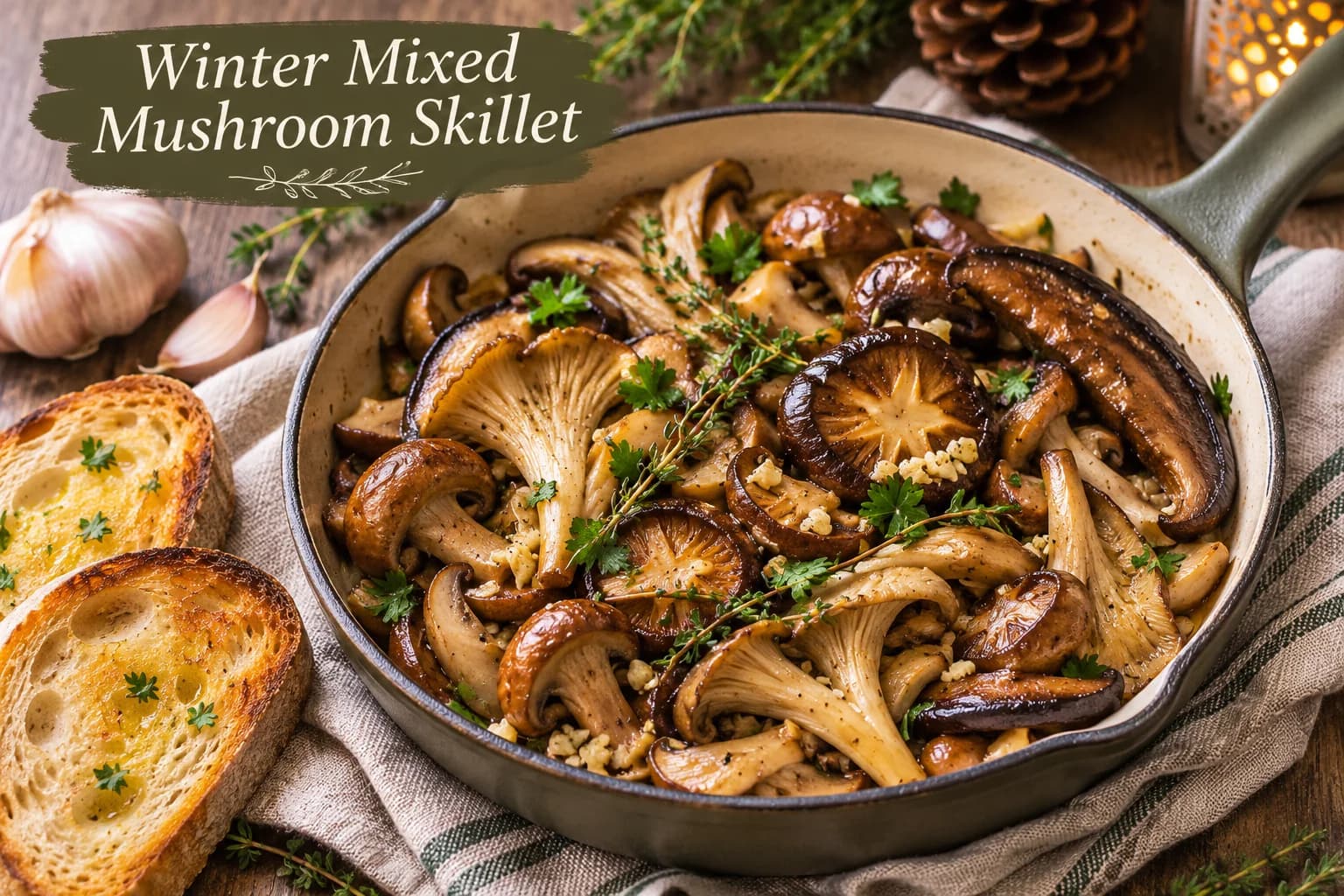
Festive indulgence, weight-loss jabs and the mighty mushroom: A few thoughts on staying well this Christmas, plus a summary of the incredible nutritional properties of mushrooms and a delicious winter recipe.
With the Christmas madness / fun (depending on your Grinch-meter) already in full flow, a couple of thoughts to help keep your health topped up amidst a month of temptation and indulgence. I am not ever suggesting being 100% abstemious, unless there’s a strong medical imperative. In fact, I think being too ‘good’ too much of the time can result in less flexibility and general misery. So yes, of course, indulge and enjoy, but just make sure you are really enjoying whatever it might be that you are drinking or eating that is outside of your ordinarily healthy choices. Just because it’s there doesn’t mean you need to consume it. Choose wisely, relish every mouthful and eat to satisfaction, rather than until you’re stuffed beyond comfort.
Meanwhile, ensure you are eating some of the really good stuff. If you are nourishing your cells with wholesome, colourful foods and, critically, nourishing your gut microbes with lots of fibre-rich, polyphenol-rich and bitter foods, you will be helping to support your body amidst the abundance of alcohol and sugar-laden festive foods that are up for grabs.
A handy tip, if you are going to a party, dinner, etc., is not to ‘save’ yourself by having very little to eat ahead of time. Eat well, hydrate well and then, when the festive buffet is at your disposal, you’re less likely to bolt down excessive amounts. Also, getting some high-intensity exercise and/or strength training in ahead of a Christmas splurge can help support blood sugar regulation and metabolic health.
Weight-Loss jabs and food-festivities
I am interested to hear people's experience of Christmas / Festivities while on a weight-loss jab. I am working so frequently with people using these drugs and I worry that in some cases, appetite is just too suppressed resulting not only in under-nourishment but also loss of pleasure. Getting the dose right is so essential to better manage but not entirely blunt one's appetite. I wonder if people are buying smaller turkeys and sharing tins of Quality Street. I'm sure we'll all be hearing a lot more about this in the new year and I am working hard to keep on top of the latest findings and recommendations for those using these seemingly life-changing medications.
Just to sober you up a little 😊, I’ve written a rather lengthy blog about cholesterol, here. I wrote it because it is a subject I discuss so frequently with clients, and there is so much misunderstanding when it comes to cholesterol’s role in our health. My blog is intended to inform and support you in having a more nuanced conversation, should you need to discuss your levels with your GP. I also provide some recommendations on how to support your body in better managing this fascinating substance.
The Magic of Mushrooms – From Forest Floor to Fork
My healthy food focus this month is the humble mushroom – although mushrooms are actually rather mighty! Fungi belong to their own kingdom of life, neither plant nor animal, and have extraordinary ways of responding to and communicating with their environment. Mushrooms are also an easy, delicious, warming addition to meals at this time of year. I find the world of fungi quite extraordinary and rather awe-inspiring, which may sound odd, yet when you begin to delve into their remarkable role in nature, coupled with the fascinating array of health-promoting compounds they contain, I think mushrooms deserve a little more attention and a lot more reverence.
The fascinating world of fungi
We tend to think of mushrooms as vegetables, yet fungi belong to an entirely separate kingdom of life and, from an evolutionary perspective, are actually more closely related to us than they are to plants – yep, hard to believe, but true nonetheless.
The mushroom we see growing above ground is merely the fruiting body of a much larger organism, rather like an apple on an apple tree. Beneath the ground, largely invisible to us, are intricate networks of microscopic fungal threads known as hyphae, which collectively form what is called the mycelium. These underground fungal networks can connect the roots of different trees and plants, forming what has rather wonderfully been dubbed the ‘Wood Wide Web’ – a sort of natural underground internet.
Certain fungi help plants access water and essential nutrients, such as phosphorus and nitrogen, in exchange for sugars produced by the plants through photosynthesis. There is also fascinating emerging research into how fungi use chemical and electrical signals and how these underground networks might enable neighbouring plants to exchange information about environmental threats – so incredible!
Fungi are also nature’s great recyclers, breaking down dead wood, fallen leaves and other organic matter, releasing nutrients back into the soil and making them available for new life. Without fungi, our natural ecosystems simply could not function as they do.
Given their extraordinary biology, perhaps it is not surprising that edible fungi contain such an interesting array of compounds that may be beneficial to our own health. I’m not just talking about the so-called medicinal mushrooms, such as reishi and lion’s mane. Many of the humble mushrooms we can buy in our local supermarkets contain some quite remarkable compounds.
What makes mushrooms so good for us?
As well as providing B vitamins and important minerals such as selenium, copper and potassium, mushrooms contain some rather special compounds:
Beta-glucans – complex fibres found in the cell walls of fungi that can interact with our immune system. There is particular interest in their ability to help regulate immune activity, rather than simply stimulating it.
Ergothioneine – a fascinating antioxidant that we cannot manufacture ourselves. Mushrooms are one of the richest dietary sources, and there is growing scientific interest in its potential to protect our cells from oxidative damage and support healthy ageing.
Glutathione – another important antioxidant involved in cellular protection and the management of oxidative stress.
Prebiotic fibres – mushrooms contain a different array of fibres from those found in vegetables, some of which can feed our beneficial gut microbes and potentially support the production of health-promoting short-chain fatty acids.
Vitamin D2 – rather remarkably, mushrooms can manufacture vitamin D2 when exposed to ultraviolet light, much as we manufacture vitamin D3 when our skin is exposed to sunlight. Placing your mushrooms, gills upwards, in direct outdoor sunlight can increase their vitamin D content. At this time of year, however, with our limited sunlight, look out for vitamin D-enriched mushrooms in the supermarket.
Which mushrooms should we be eating?
As with so many foods, variety is key. Different mushrooms contain differing amounts of these beneficial compounds, as well as bringing quite different flavours and textures to our meals.
Winter Mushrooms at a Glance : Four edible mushroom varieties – chestnut, oyster, shiitake and portobello
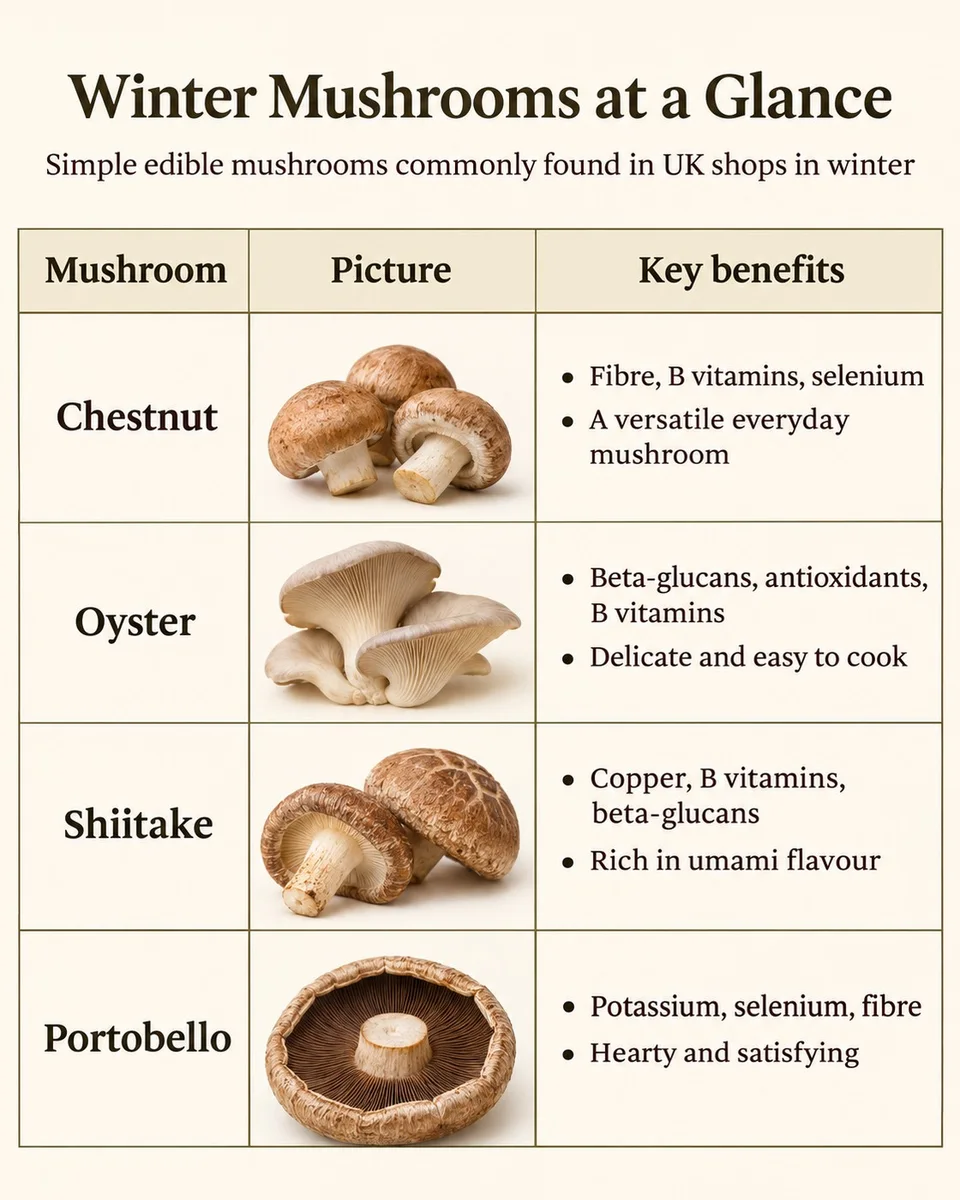
Interestingly, white button, chestnut and portobello mushrooms are all forms of the same species, Agaricus bisporus, with portobello being the more mature form of the chestnut mushroom.
Oyster mushrooms are particularly interesting for their ergothioneine and beta-glucan content and have been studied for their potential beneficial effects on blood sugar regulation and cholesterol metabolism, although more robust human studies are needed.
Shiitake mushrooms have a long history of use in traditional Asian medicine and contain a particular beta-glucan called lentinan, which has been extensively studied for its potential immune-modulating properties.
All these mushrooms have that lovely savoury taste known as umami, which adds a wonderful depth of flavour to food.
If you tend to buy the same mushrooms each week, I encourage you to experiment with some different varieties. Combining several in one dish is a great way of increasing the diversity of compounds we are feeding ourselves and our gut microbes, as well as making for a much more interesting meal.
Here’s a delicious, simple recipe to get you started.
Winter Mixed Mushroom Skillet with Garlic, Thyme and Lemon
Serves 2 | Ready in approximately 20 minutes
Ingredients
150g chestnut mushrooms
100g oyster mushrooms
100g shiitake mushrooms
1 large portobello mushroom
2 tbsp extra virgin olive oil
A generous knob of butter
3 cloves of garlic, finely chopped
A few sprigs of fresh thyme
A generous handful of fresh flat-leaf parsley, chopped
Zest and juice of half a lemon
Sea salt and freshly ground black pepper
Method
Roughly chop the chestnut and portobello mushrooms, tear the oyster mushrooms into strips and slice the shiitake mushrooms, removing any particularly tough stalks.
Heat the olive oil in a large frying pan. Add the mushrooms, ideally in batches so as not to overcrowd the pan, allowing them to turn golden brown rather than steam.
Once the mushrooms are nicely browned, reduce the heat a little and add the butter, garlic and thyme. Cook for a further 3–4 minutes, or until all the mushrooms are thoroughly cooked.
Stir through the fresh parsley, lemon zest and a good squeeze of lemon juice.
Season to taste and serve whilst lovely and warm.
Serving suggestions
This makes a delicious accompaniment to grilled fish, chicken or steak, or you could stir through some butter beans and wilted cavolo nero for a lovely, fibre-rich vegetarian dish. Alternatively, serve on a slice of toasted, proper sourdough with a couple of poached eggs for a wonderfully nourishing, savoury breakfast or brunch.
Enjoy and have a happy, healthy-ish and jolly festive time, whatever that might mean for you.